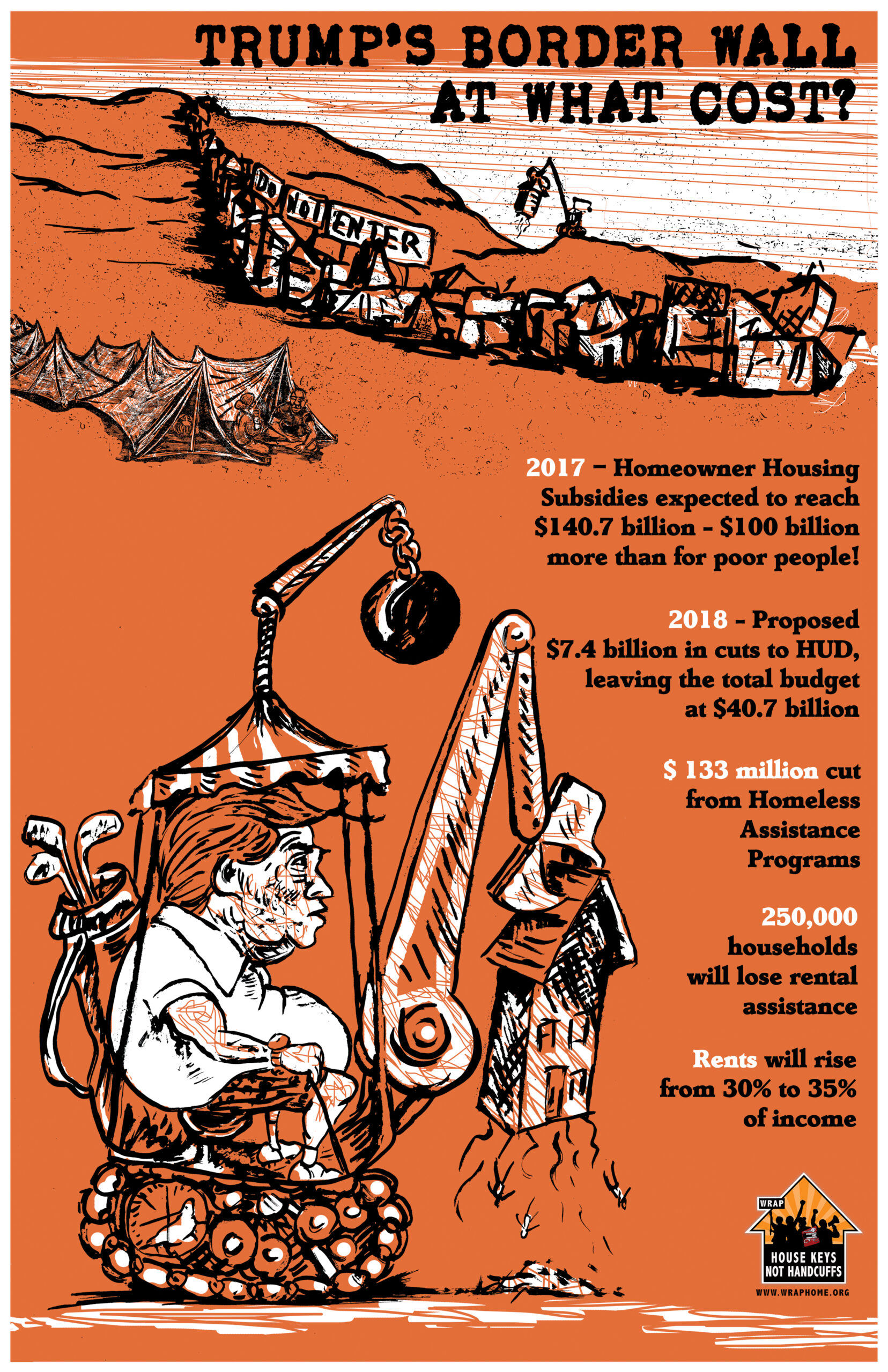
The federal government played a major role in creating homelessness by cutting tens of billions of dollars from affordable housing programs beginning in the early 1980s. Relying on the market to deliver affordable housing has only worsened the problem.
Since then, every federal plan to address homelessness has primarily focused on “fixing” homeless people rather than the broken housing system. This approach – part of the broader war against the poor ushered in by Reagan – has institutionalized a vicious cycle of homeless policy. As a result, millions of people live without housing in the U.S. every year — including well over a million children.
WRAP’s housing campaign attempts to reverse this trend by unifying communities under the simple premise that every person deserves a safe place to call home. Our first step was to create Without Housing: Decades of Federal Housing Cutbacks, Massive Homelessness and Policy Failures 2006 to reframe the national debate on homelessness, affordable housing, and governmental funding priorities, the great response from the report push us to update Without Housing: Decades of Federal Housing Cutbacks, Massive Homelessness and Policy Failures Update 2010.
Power Point Presentation
We then launched a mass public education campaign, building relationships with thousands of people across the country. Having laid this groundwork, we’re now organizing around these demands to win federal reinvestment in affordable housing programs.
Give us a call if you are interested in learning more.
2022 Housing Survey
What is the Housing Survey and why are we doing it?
Housekeys Action Network Denver together with Western Regional Advocacy Project are doing an outreach survey to hear from people without housing about desires and needs for housing. This survey will gather input on what kinds of housing houseless people want, how that housing should be accessed, and other housing policies.
We are doing this survey…
-To gather information and input from people who have experienced houselessness about what housing we should be fighting for.
-To build a foundation for housing legislation or policy/practice changes needed in housing.
-To build a movement of houseless and poor people fighting for housing for all.
What do we mean by Outreach?
We believe firmly that the fight for housing must be directed by the priorities of those needing that housing. In order to do this we must meet people where they are at, listen, and document what folks say. This is what we will be doing through outreach with this Housing Survey.
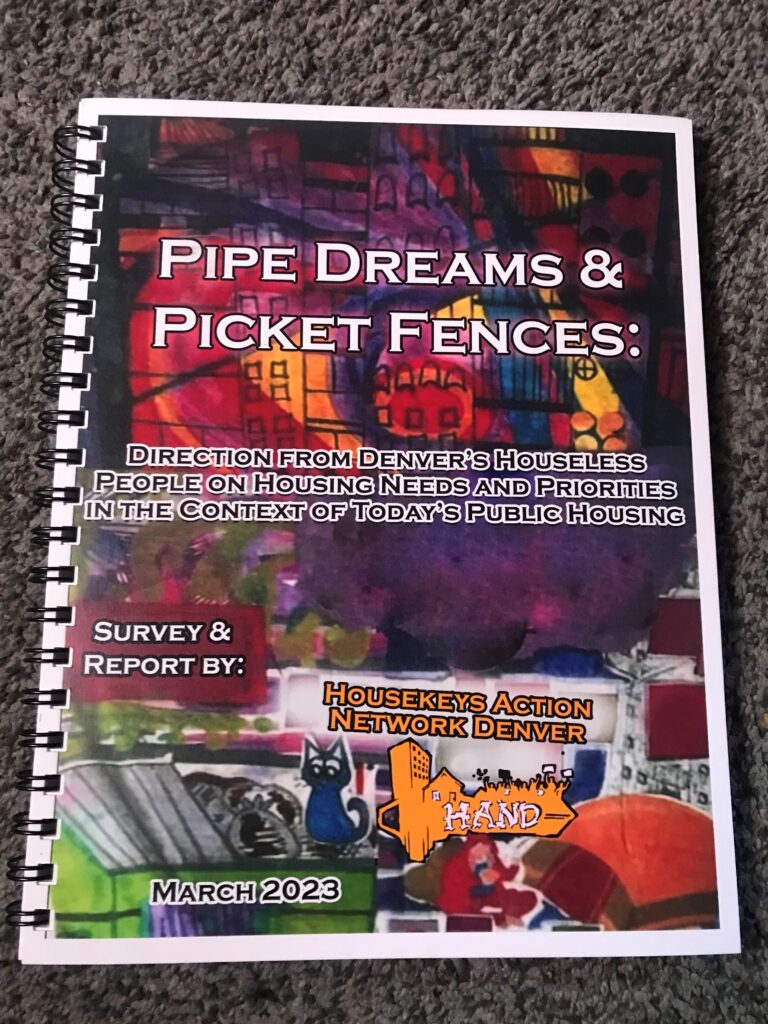
Pipe Dreams and Picket Fences Report
Direction from Denver’s Houseless People on Housing Needs and Priorities in the Context of Today’s Public Housing
gives direction from houseless people on what the housing is we need to create: how much does housing need to cost, what should the processes be to secure housing, where should that housing be, what rules should be in place or not, and what supports are needed in housing. The findings from talking with almost 1000 houseless people reveal clear themes of common need and desire. As the report title “Pipedreams and Picket Fences” alludes, we hear a desire for quality homes and at the same time the sense that this is a “pipedream” out of reach. Houseless people make it clear in this survey what housing is desired and how close to impossible it is to get that housing.
Housing Factsheets
Artwork

Housing Factsheets